Nigella Lawson Recipes
All Nigella Lawson Recipes In One Place. (Fan Website)
Desserts

Nigella Lawson's Cappuccino Pavlova
Jump to Recipe
Nigella Lawson's Cappuccino Pavlova

This nigella lawson cappuccino pavlova is my favourite of all her pavlovas, and I say that as a fully paid-up pavaholic. It comes from Nigellissima, her Italian-inspired book, and it swaps the usual fruit for something more grown-up: a coffee-scented meringue the colour of milky coffee, piled with softly whipped cream and dusted with cocoa so it looks — and tastes — like the top of a cappuccino. There is no fruit to chop and no sauce to make; the whole effect rests on bitter espresso powder against sweet, marshmallowy meringue, and it works beautifully. If you can whisk egg whites, you can make this.

Why This One Works So Well

The espresso powder is mixed into the sugar before it goes anywhere near the whites, so the coffee dissolves evenly as you whisk — no bitter pockets, no gritty specks, just a smooth coffee flavour and that pretty écru colour all the way through.

Cornflour and vinegar are the marshmallow-centre insurance policy: they keep the middle soft and chewy while the outside dries crisp, which is exactly the contrast a pavlova lives or dies by.

Cooling the meringue slowly in the switched-off oven is what protects the shell. A sudden rush of cold kitchen air is the usual cause of big cracks, so the pavlova stays where it baked until it is completely cold.

Cappuccino Pavlova
Prep Time20 mins
Cook Time1 hr
Total Time1 hr 20 mins, plus cooling
Servings8–10 slices
DifficultyEasy
CategoryDesserts

Ingredients

For the coffee meringue
  • 250g caster sugar
  • 4 tsp instant espresso powder (not instant coffee granules)
  • 4 large egg whites, at room temperature
  • Pinch of salt
  • 2 tsp cornflour
  • 1 tsp white wine vinegar
For the topping
  • 300ml double cream
  • 1 tsp cocoa powder, for dusting
Equipment
  • Electric whisk or stand mixer
  • Large metal mixing bowl
  • Baking sheet and parchment
  • 23cm cake tin (for drawing the circle)
  • Palette knife or spatula
  • Small sieve or tea strainer

Nutrition (per serving, estimated)

  • Calories: 270 kcal
  • Carbohydrates: 34g
  • Protein: 2g
  • Fat: 14g
  • Saturated fat: 9g
  • Sugar: 33g
  • Fibre: 0g

How To Make Nigella's Cappuccino Pavlova

  1. Heat the oven and draw your guide. Preheat the oven to 180°C/160°C fan/Gas 4. Line a flat baking sheet with baking parchment and, using a 23cm cake tin or plate as a guide, draw a circle on the paper in pencil. This is the outline your meringue needs to fill.
  2. Mix the sugar and espresso. Stir the caster sugar and instant espresso powder together in a small bowl until evenly combined, and set aside. It must be espresso powder, not granules: the powder dissolves right into the meringue as you whisk, while granules stay gritty and harsh.
  3. Whisk the whites to soft peaks. Put the egg whites and the pinch of salt into a clean, grease-free bowl — metal is ideal — and whisk until they hold soft, billowy peaks. Any trace of grease, including a speck of yolk, will stop the whites whipping properly, so separate the eggs carefully. Egg whites being whisked in a stand mixer to stiff, glossy peaks
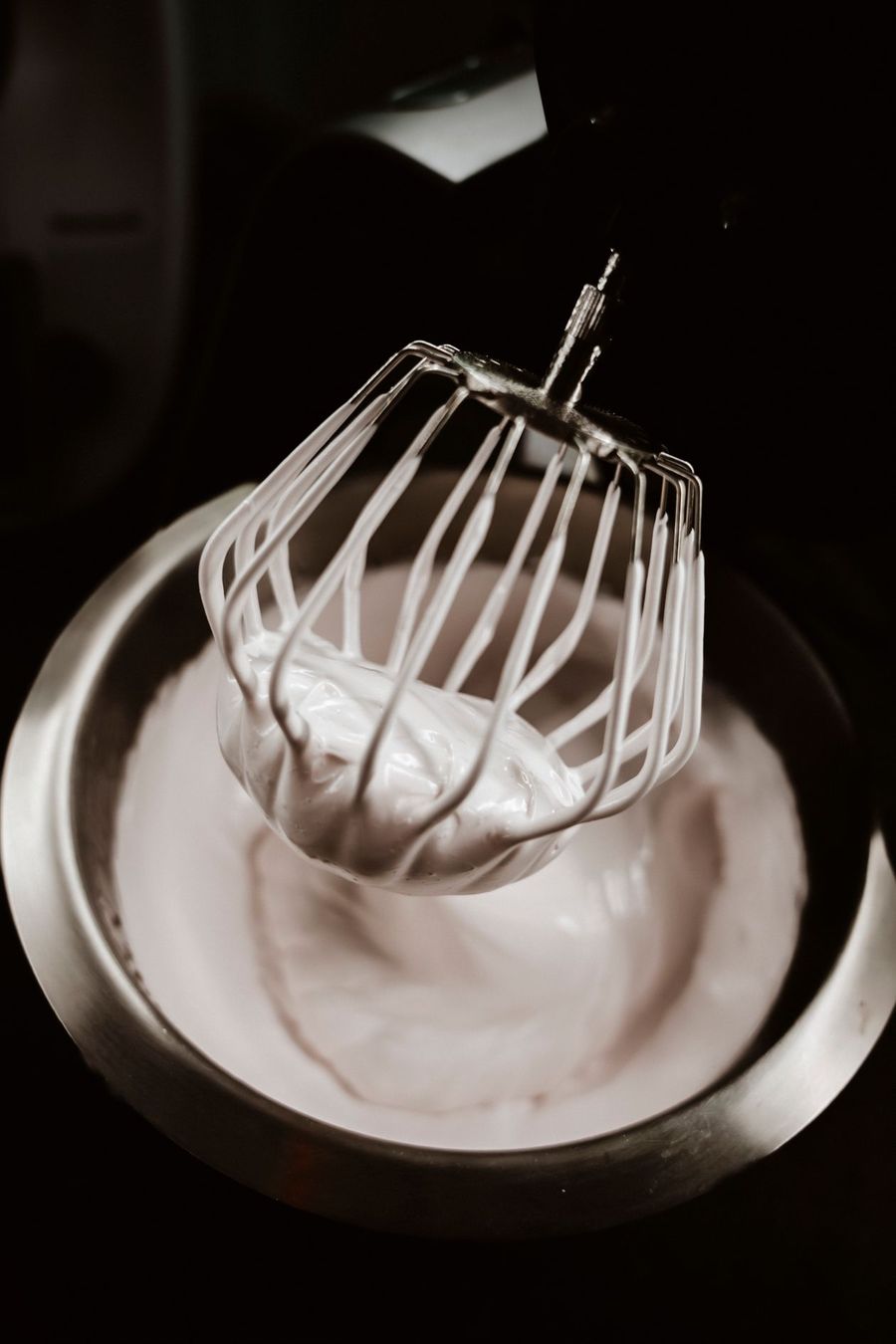
    Photo by Katia Miasoed via Pexels

  4. Add the coffee sugar, spoon by spoon. Keep whisking and add the sugar-and-espresso mixture a tablespoon at a time, letting each spoonful disappear before adding the next. By the end you should have a firm, glossy meringue the colour of café au lait, holding stiff peaks when you lift the whisk.
  5. Fold in the cornflour and vinegar. Sprinkle over the cornflour and white wine vinegar and fold them in gently with a large metal spoon, keeping as much air in the mixture as you can. This little duo is what guarantees the soft, marshmallow centre inside the crisp shell.
  6. Shape the pavlova. Spoon the meringue onto the parchment inside your drawn circle and spread it into a fat disc with smooth sides and a level top, using a palette knife or the back of a spoon. This pavlova is topped rather than filled, so a flat, even top matters more than a hollow.
  7. Bake low, then let it cool in the oven. Put the pavlova in the oven and immediately turn the temperature down to 150°C/130°C fan/Gas 2. Bake for 1 hour, until the shell is crisp and dry to the touch. Then switch the oven off and leave the pavlova inside, undisturbed, until completely cold — this slow cool is what keeps the shell in one piece.
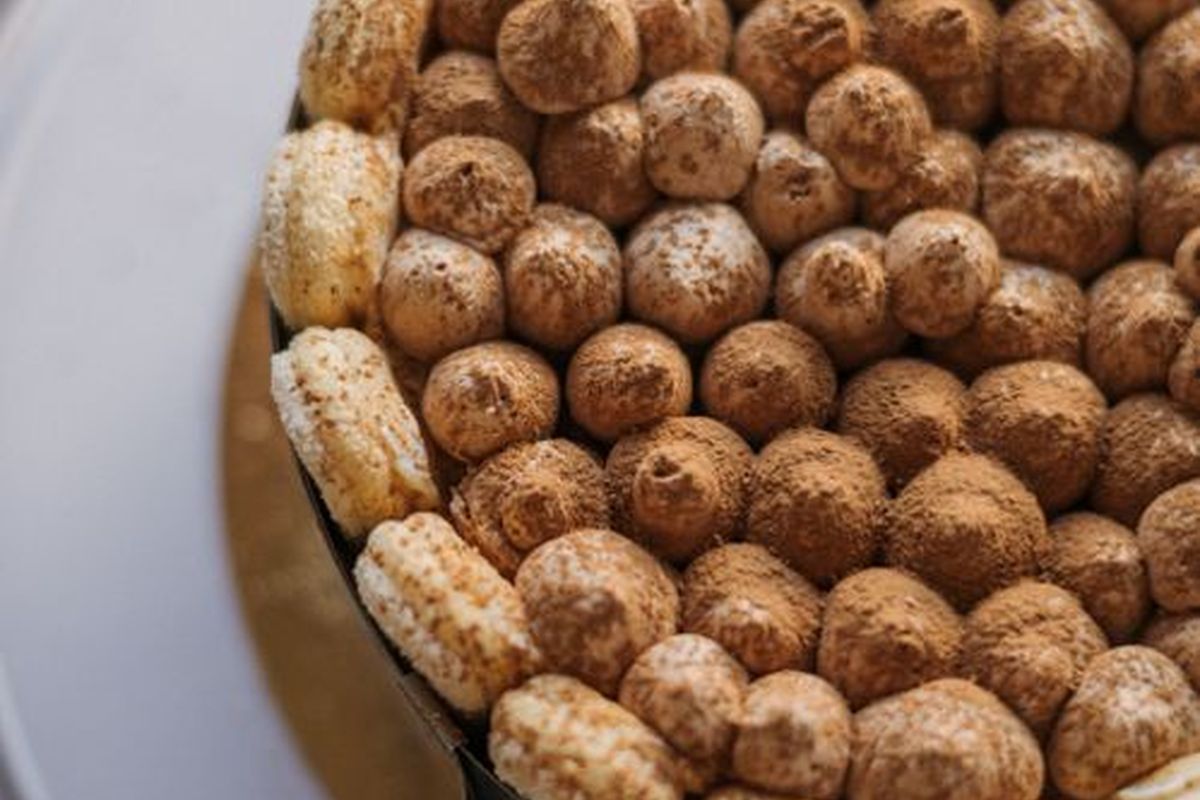
  8. Invert, cream and dust. Lift the cold pavlova, still on its paper, and place it top-side down on a flat serving plate, then peel off the parchment. Whip the double cream until it is thick but still soft and billowy, and spread it delicately over the top. Finally, push the cocoa powder through a small sieve or tea strainer over the cream, cappuccino-style, and take it straight to the table. Cocoa powder being sifted over a cream-topped dessert, cappuccino-style
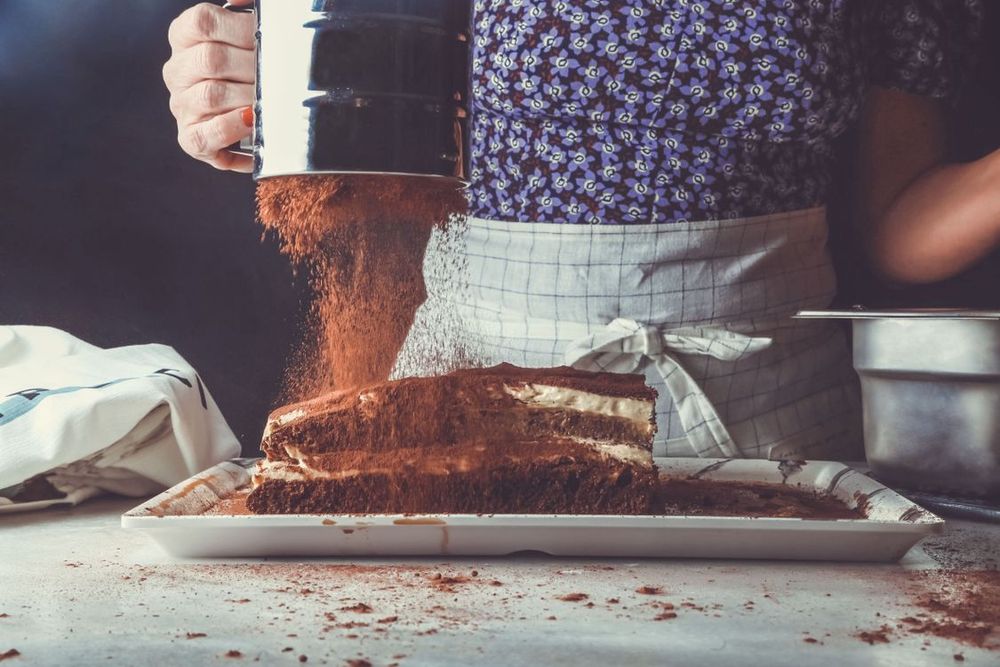
    Photo by Emre Ezer via Pexels

A slice of cream-topped coffee cake dusted with cocoa — the cappuccino-style finish this pavlova wears

Photo by Pervane Mustafa27 via Pexels

Tips From My Kitchen

  • Room-temperature egg whites whisk to a bigger, more stable volume than fridge-cold ones, so take them out of the fridge half an hour before you start.
  • Do the finger test before shaping: rub a little meringue between finger and thumb. If it feels gritty, the sugar has not dissolved — whisk for another minute. Undissolved sugar is the main cause of weeping pavlovas.
  • Dust the cocoa at the very last moment. Left sitting on the cream it slowly absorbs moisture and turns blotchy; done at the table, it looks — and smells — wonderful.

Making It Yours (Without Ruining It)

  • Decaf instant espresso powder works in exactly the same way, if you are serving this after dinner to anyone who avoids caffeine.
  • No white wine vinegar? A teaspoon of lemon juice or cider vinegar does the same stabilising job.
  • For a slightly richer topping, fold 100g of mascarpone into the whipped cream — very tiramisu, and entirely in the spirit of the book this recipe comes from.

Storage + Serving

The undecorated meringue base keeps for up to 2 days in an airtight container at room temperature. Once it is topped with cream, serve it within a few hours; leftovers will keep in the fridge for a day, though the shell will soften — still delicious, just different.

Serve with small cups of espresso or a bitter Italian coffee alongside — the contrast with the sweet meringue is the whole point.

A few amaretti biscuits crumbled over each slice add a lovely almond crunch, or pour a small glass of amaretto for a dinner-party finish.

Frequently Asked Questions

What is the difference between instant espresso powder and instant coffee granules?

Espresso powder dissolves completely into the sugar and then into the meringue, so the coffee flavour is smooth and even. Granules never fully dissolve — they stay gritty, taste harsher, and can make the meringue weep. Nigella is specific about this, and she is right.

Can I make the cappuccino pavlova base ahead of time?

Yes — this is one of the best pavlovas to get ahead with. The cooled base keeps for up to 2 days in an airtight container at room temperature. Add the whipped cream and dust the cocoa only when you are ready to serve.

Why has my meringue turned out beige instead of white?

That is exactly right. The espresso colours the meringue a pale coffee shade — écru, like milky coffee — all the way through. A streaky or patchy colour means the sugar and coffee were not evenly mixed before they went in.

My pavlova cracked — what went wrong?

The usual causes are sugar that had not fully dissolved before baking, or the pavlova cooling too fast out of the oven. Cool it completely in the switched-off oven, and if it happens again, we have a full guide to the seven causes of cracked pavlova on the blog, with the fix for each one.

Can I make individual cappuccino pavlovas instead?

Yes, and Nigella has served them this way herself. The same mixture makes about 30 mini pavlovas: dollop tablespoonfuls into 4cm circles on two lined sheets and bake for 30 minutes at the reduced temperature, then top each one with cream and cocoa.

Similar Recipes

  • Chocolate Guinness Cake — coming in the next publishing round
  • Lemon Polenta Cake — coming in the next publishing round
  • Old-Fashioned Chocolate Cake — coming in the next publishing round
  • Flourless Chocolate Lime Cake — coming in the next publishing round
Ellie Hartley, Founder, Cook & Writer of Nigella Lawson Recipes
About the Author
Ellie Hartley
Founder, Cook & Writer · York, England · Nigella fan since 1998

Ellie Hartley is a home cook from York who has been cooking Nigella Lawson's food since How to Eat was published in 1998. She started this fan site to cook Nigella's best-loved recipes — making each one in her own kitchen and writing it up in her own words, with the timings and tips that make it work at home.

More about Ellie and this fan site →